2 min to read
Stored XSS FOUND! In Many Notes, The Best Note Taking APP!
How I Found a Stored XSS in Markdown Rendering
Severity: High (CVSS 7.3)
The Discovery
I was testing the markdown rendering feature in the Many Notes application when something caught my eye. It looked like the application was running user content through a markdown parser and then trying to clean it with DOMPurify. On paper, that sounds safe enough. In practice, it wasn’t.
After a couple of quick checks, I realized I could sneak in a script tag and get it to execute. That meant the app was vulnerable to a classic stored XSS.
Where It Happens
The issue shows up when viewing files like this:
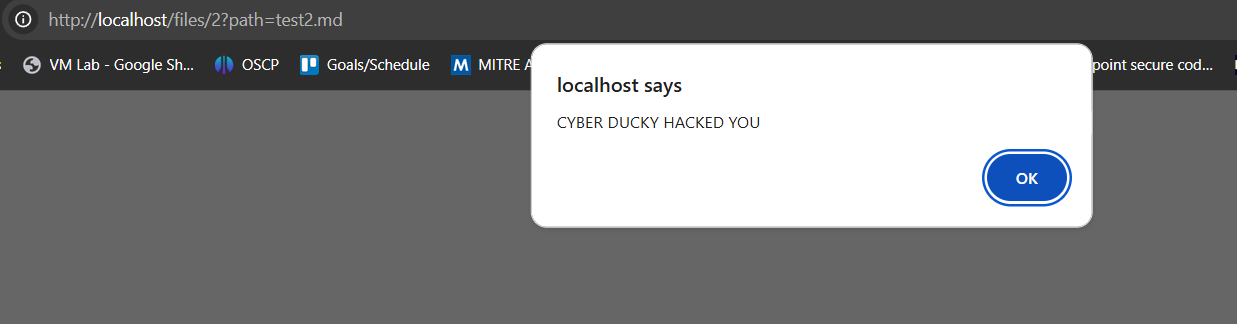
http://localhost/files/2?path=test2.md
If you upload a malicious markdown file, the contents get stored and later displayed without proper sanitization.
Under the Hood
Here’s the relevant code path:
if (options.content) {
    content = DOMPurify.sanitize(
        markedService.parse(options.content),
    );
}
The problem is that DOMPurify doesn’t catch everything. It’s good at blocking obvious stuff, but more creative payloads (SVG tricks, DOM clobbering, mutation XSS) can still get through.
Proof of Concept
The simplest test payload worked right away:
<script>alert("Cyber Ducky was Here")</script>
Open the file in the browser, and sure enough, the alert popped.
Why It Matters
This isn’t just a harmless pop-up. Once an attacker has XSS in the application, they can:
- Steal cookies or tokens to hijack sessions.
- Act as the logged-in user (full account takeover).
- Read sensitive data out of the vault.
- Inject malware or phishing redirects into pages other users trust.
Fixing It
If I were patching this, here’s what I’d do right away:
- Don’t just sanitize in the browser — add server-side sanitization before saving content.
- Enforce a strong Content Security Policy so rogue scripts can’t run.
- Revisit the DOMPurify configuration and enable stricter settings.
- Validate uploaded files properly instead of just trusting the parser.
Timeline
- Day 0 – I discovered and reproduced the issue.
- Day 1 – Sent the report to the vendor.
- Day 30 – Plan to go public if it isn’t fixed.
Closing Thoughts
This was a straightforward find, but it highlights a bigger point: relying solely on client-side libraries like DOMPurify isn’t enough. XSS is sneaky, and even well-known tools can miss certain payloads.
Thank You Bruno at Many Notes for getting this patched ASAP!
Here is the GitHub Credit given: https://github.com/brufdev/many-notes/releases/tag/v0.10.2
Advertisement


Comments